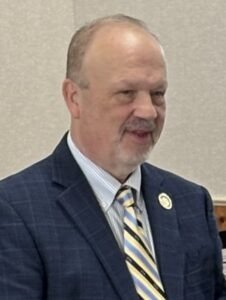
Perry A. Stambaugh, Penn Lines
Honored: August 2026, SEA Institute, Pittsburgh, PA
A farm kid from central Pennsylvania, Perry enjoyed a nearly four-decade career in agricultural, community, and, most notably, electric cooperative publications on local, statewide, and national levels.
In 1989, he joined the Pennsylvania Rural Electric Association and its sister power supply organization, Allegheny Electric Cooperative, both based in Harrisburg, Pa. Within a year he was promoted to editor of Penn Lines, reaching more than 600,000 electric co-op consumers monthly in PA and New Jersey. He soon assumed responsibility for all other corporate communication duties at both organizations.
In 1991, he shepherded Penn Lines through the process of becoming the first electric co-op statewide magazine to publish in full color (including local co-op news pages). The success of that endeavor soon revolutionized how all SEA publications were produced.
During his time at Penn Lines, Perry served as president of the National Electric Cooperative Editorial Association as it changed its name to National Electric Cooperative Statewide Editors Association (the “s” on “Cooperatives” added much later) and captured the prestigious NRECA George W. Haggard Memorial Journalism Award for 2001. He also helped produce several SEA videos highlighting the importance of electric cooperative statewide publications and a critical training video for local co-op page news editors.
A big believer in “Cooperation Among Cooperatives,” Perry championed efforts to have printing and other statewide publication needs controlled by cooperative-driven initiatives. During the early days of America’s electric deregulation push (late 1990s) he was the leader in forming the “Mason-Dixon Printing Consortium” among four eastern electric cooperative magazines. For several years, participating publications realized significant savings by agreeing to use the same printing company, same paper stock, adjusting publication dates to gain the most efficiencies possible, and using the same mail house.
In 1996, Perry stepped up as a co-founder and incorporating director of Austin, Texas-based National Country Market Sales Cooperative, what was at the time the most complete effort to finally bring order and the cooperative model to electric cooperative publication advertising sales.
In 2006, Perry was chosen from a nationwide search to serve as senior director & editor of RE Magazine, the flagship publication of NRECA, where he revitalized NRECA’s support of SEA and electric cooperative statewide publications. In late 2013, the National Rural Utilities Cooperative Finance Corporation (CFC) asked Perry to come aboard as director of corporate relations and later as director of member communications. He retired from the electric cooperative program in August 2019 after 30 years of service.
Since 2020, Perry has served as a member of the Pennsylvania House of Representatives from the 86th Legislative District, which includes his home Perry County and most of neighboring Juniata County. He is the sixth-generation owner/operator of a 200-acre bicentennial family farm (Green Pastures Farms) located in Green Park, where he resides in a Civil War-era farmhouse built by his great-great grandfather. He has also endowed an ag journalism scholarship in the Penn State University College of Agricultural Sciences.
“The cooperative business model works,” Perry declares. “Statewide publications only need the courage to embrace it.”
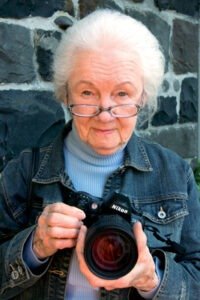
Ouida Cox, Arkansas Living
Honored: August 2025, SEA Legislative Update, Arlington, Virginia
For more than 60 years, Ouida Cox told the story of Arkansas with a camera, a notepad, and a deep love for people. “Miss Ouida,” as she was affectionately called, began her co-op career in 1949 as one of four employees of the statewide association. As associate editor, she was responsible for the publication’s “Women’s Department,” which then included recipes and dress patterns readers could order. In 1968, she took over as editor, a position she would hold for 44 years, until her retirement in 2012. She watched the magazine grow from less than 20,000 readers to more than 383,000 — the largest circulation of any publication in the state. For many years, she was solely responsible for the magazine’s writing, editing, photography, page design, and shepherding pages through final production; she brought elegance, style, and a sharp sense of humor. “It’s so monthly,” she joked about producing the magazine.
She served two terms as president of the SEA from 1972–74 and was a mentor for many fledgling co-op communicators over the years. Her favorite line when meeting a new statewide editor was to tell them, “Sit down. You’ve got a lot to learn.” Her greatest joy was in telling everyday stories. “I have always tried to remember that the magazine is first and foremost for the members, those people out there at the end of the line,” she said. “Rural Arkansas is their magazine. We’re supposed to look out for them.”
Ouida died in 2021 at the age of 98.
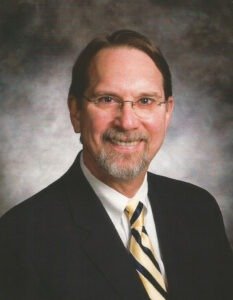
Darryl Gates, Alabama Living
Honored: March 2025, NRECA PowerXchange, Atlanta, Georgia
When Darryl Gates retired as vice president of communications at Alabama Rural Electric Association and editor of Alabama Living in 2012, one of his colleagues in the Statewide Editors Association described him this way: “Darryl was the guy who always seemed to be at the center of whatever SEA was doing. He seemed always to be mending fences, not to keep anyone out, but to keep everyone together.” Darryl became editor of AREA Magazine in 1983, planning at the time to use it as a career stepping stone. Instead, he fell in love with co-op culture, and that love shone through his entire career.
Fairly early in his SEA tenure, he stepped up to chair the newly created SEA Task Force and its Task Force Breakfast. Aside from serving to get everyone up early for decades to come, the SEA Task Force became a breeding ground for some of SEA’s best ideas — from basics like annual editorial calendars to the bigger ideas that serve SEA members: “Use or Usage,” our electric utility style guide; the bi-annual SEA Institute; and the Sunrise Advertising Group, which became National Country Market, which became AMP. He formed a consortium with other statewide publications to negotiate more favorable printing and paper prices. He served a term as SEA president in 1987 and won the Haggard Award in 2004. But just as importantly for the members of the SEA, he and his magazine were at the forefront of the movement to modernize — taking it from a flimsy black and white newsprint edition to coated stock with four-color throughout and advocating to change the name from “Area Magazine” to “Alabama Living” to better embody the community feel of electric co-ops. He was among that generation of editors across the country who built our publications into what they are today.
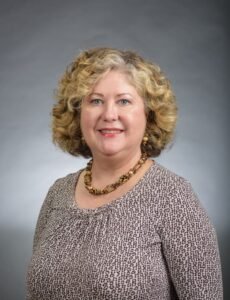
Anita Richter, Kentucky Living
Honored, September 2024, SEA Institute, Louisville, Kentucky
In her 27 years at Kentucky Electric Cooperatives, Anita Richter was always a co-op champion and tireless advocate of the Statewide Editors Association — all in service to Kentucky’s member electric cooperatives. Anita grew up on co-op lines, so it was natural for her to join Kentucky Living as managing editor in 1995, not long after she graduated from Indiana University Southeast. She was in that role in 2014 when Paul Wesslund and the Kentucky team was honored with the George W. Haggard Memorial Journalism Award, and became the magazine’s 14th editor the following year. Anita was a member of the national Cooperative Communicators Association for 25 years, serving six years on the board and as its president from 2010–2011.
Anita always stressed the importance of being involved with groups such as CCA and SEA to her staff and peers around the country, because she knew that surrounding one’s self in the co-op family was a big step toward success. She advocated tirelessly for statewide magazines during her career, and even helped spearhead a project to investigate the possibility of SEA members forming a national paper-procurement group as a last hurrah in 2022. She is dedicated to Kentucky Living and its sister magazines and has proven her dedication time and time again. Upon her retirement in 2023, she was approved as an editor emeritus member of SEA, and remains an advocate for all of us. “Working at (Kentucky Living) was fun and fulfilling, and you always knew that your team had your back no matter what,” she says, “and I know that will not change.”
Jim McCarty, Rural Missouri
Honored: August 2023, SEA Legislative Update, Arlington, Virginia
Whether it’s photographing a Bolivian child’s smile as they experience in-home electricity for the first time, chatting with a member at the Missouri State Fair, or encouraging editors from other states, Jim McCarty has been a champion for Rural Missouri and all statewide publications for nearly four decades. Jim graduated from the University of Missouri in 1984 and worked for a year as an assistant sports editor and photographer at the Poplar Bluff Daily American Republic before he joined the Rural Missouri staff in 1985. He quickly moved up the ranks to managing editor in 1987 and editor in 1989, and is the the longest-serving editor in the magazine’s history. Under his leadership, Rural Missouri nearly doubled its circulation to 580,000 and transitioned from a 16-page newsprint tabloid to a 56-page magazine-size glossy publication. He guided the magazine to hundreds of awards, including four of its six George W. Haggard Memorial Journalism Awards. He’s been recognized as the writer of the year for the Cooperative Communicators Association and was awarded the group’s Michael Graznak Young Communicators Award in 1995.
He led the Statewide Editors Association as president in 1992-93 and later saw the value in holding an institute outside of Washington, D.C., every other year. With very little outside help, Jim hosted the first ever SEA Institute in Columbia, Missouri, in 1999 — setting the stage for the informative and entertaining institutes we still enjoy. In the mid-1990s, Jim saw the need for a national advertising network that would help all the statewide publications across the country, and in 1996 became a founding member of National Country Market (now known as American MainStreet Publications, or AMP), which still plays an essential role for many SEA members. Above all, Jim is a mentor to all those who have shared his time at Rural Missouri and its counterparts in other states. He is quick to share ideas and tips — as well as his many, many jokes.